Showing posts with label Inkpot. Show all posts

Thursday, March 8, 2018

Precious Beta Readers


A beta reader is someone who looks over your manuscript to find weaknesses before making suggestions for improvements.  Unlike how we utilize critique group members, your beta reader usually reads the entire book at once.  He more accurately simulates the experience of your book’s ultimate audience—your buyers.  Their time and skills are best used if they don’t need to focus on line edits like grammar and spelling.  Try your best to give them a clean copy. 


A helpful beta reader will make suggestions to improve the story, characters, and setting, basically all the big picture items.  I’ve been a beta reader and I’ve also had others take that one last look for me.  I’ve found they can be book-savers: finding plot holes, questionable believability, problems with continuity and characterization, even factual inaccuracies.


It’s common for a careful writer to have a beta reader or two peek at her book before she sends it to agents or editors or out for self-publishing.

It helps your reader to know what you are concerned about.  Below are some questions you might want to ask so you can get actionable feedback on your book:

- Did you feel drawn into the story?
- Did anything bug you?
- What's the one word you'd use to describe each character?
- Who was your favorite character?
- Favorite scene?
- On which page do you think you know what the story will be about?
- Did the story grip your attention right away?
- What do you wish were different in chapter one?
- What's your favorite Chapter?
- Where did you skim?
- Why?
- What do you feel the arc of each character was?
- Was that satisfying?
- Where did you cringe?
- Why?
- Where did you cry/gasp/laugh?
- Why?
- What was too predictable?
- Where?
- What do you consider the dark moment?
- Were you satisfied by the end?
- Why?
- Would you want to read the next book?

You'll notice there are many whys... that's because it’s much more helpful to know WHY something is good or bad so you can go back and do more or less of that thing.

Remember to thank your Beta Reader!  In one case I sent my beta reader a box of goodies that matched the theme of the book she’d read for me.  One of the best gifts you can offer is to reciprocate.   It’s a learning experience whether you are on the giving or receiving end.  To all the beta readers out there:  THANK YOU!   

      -   From the Inkpot

Saturday, August 20, 2016

IDEAS TIME TRAVEL


Sister Folio and I wrote a treatment and beginning of a script called Chartres
 
When we pitched it, we were told it sounded derivitive of Di Vinci Code. We'd created it before the book came out. I've heard many authors talk about this happening to them.  It seems ideas leak out into the air and get caught by others.  
 
Another of our scripts, No One Asked the River, takes place in China, a whipper-snapper producer said, "China? Nobody cares to watch a Chinese themed or located movie." The very next year Crouching Tiger came out, then House of Flying Daggers, Kung Fu Soccer, etc - big hits. Wouldn't it be ironic if that same producer called No One Asked the River derivative now? 

 
Ideas time travel.

We need to get our work out there when it's wanted.  If only we could know exactly when that is.

Has this ever happened to you?  If so, please share your experience with

the Inkpot.

Tuesday, September 29, 2015

MELODRAMA


Melodrama is the stuff of old movies, old stage plays, and many old romance novels.
It's hard, sometimes to spot it in my own writing, but for some reason, it screams out to me in my clients' work. And not in a good way. Why does it matter? Don't we all know what the back of a hand on the forehead means? Is it not relatable. No, frankly it isn't.

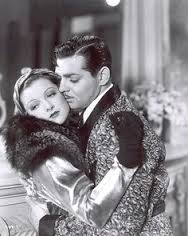
Do you ever watch old movies? Can you picture Clark Gable, Cary Grant, Mae West, Joan Crawford, and Ronald Reagan (just checking to see if you are still reading) swooning or opening their mouths in perfect circles, eyes bulging?  Isn't it somewhat laughable today to think they were expected to overact like that?  But that was how they made things bigger than life to excite the viewers.


Now it is authenticity that draws viewers in. Think of Nicole Kidman or Meryl Streep at their best. We can see numerous emotions cross their faces in a matter of minutes as something dawns on them. It is often the music itself that sounds melodramatic or old school. To see an amazing example. Watch this clip from Birth, beginning at 1:50.  You'll see so many emotions cross Kidman's face. Can you even count them?  https://www.youtube.com/watch?v=lpJj9c2OV-0

Incredible right? It didn't take exaggerated emotions to get the ah-ha moment across. Her revelation appeared much more like it would in real life if a boy was claiming to be her reincarnated husband (especially her old beau Tom Cruise)... only to end up being true.


Next time your character wants to express undying love, fear, surprise or any number of other emotions, instead of making the dialogue big and unrealistic, use the words or feelings that your character would really have. Method act on the page.
 
Do the hand on forehead test and say the lines.  Do you feel like you are in a soap opera? If so, make the emotion come from the inside, from real dialogue, real narrative. Let it arise out of your Point of View. And give us the real thing.   Good Writing! - From the Inkpot


Wednesday, August 27, 2014

Change Someone's Story


I appreciated this blog post so much I decided I should share it here.
The theme, “Take someone's face in your hands.”  It's about being the one to make a stranger feel better.   A lovely thought.  I had a similar experience April in an airport when I missed a plane and had to run crying to catch another one to get to my dying father.  A woman in the boarding line ahead of me noticed my crushed state.  She offered to carry my bag and put it in the overhead for me.  She even gave me a hug as we got off the plane.  It reminded me that wonderful things can happen even parallel to devastating things.

- Inkpot

Wednesday, July 30, 2014

WHICH AGENT?


I have yet to publish a novel with my name on the cover.  With nonfiction, I contracted to write a literary cookbook only to have it fall through when the photographer backed out.  But my work has been represented.  I’m the exception to the cliché about it being harder to get an agent than a contract with a publishing house. 

Hooking up through conference pitches and query letters, eight agents have offered to represent my work.  I turned down some of those opportunities.  Roll your eyes.  I know.  This is not to brag, but to establish my credibility on the topic of finding an agent. 

Here are my suggestions for those of you who are ready to have help in selling your book.

When you pitch yourself and your book to an agent, be sure to target the right one.  Many factors will determine which will be your best advocate. 


Be sure they represent your genre.  This doesn’t only mean he likes the genre, although you want your agent to be passionate about your mystery, which may be challenging for one who doesn’t like mysteries.  It means he’s sold them before and will have connections to editors that acquire them.  If you write in more than one genre, as I do, you may be better off getting an agent who is part of an agency that is large enough to represent a variety of genres.


The large Jane Dystel agency represented my cookbook for a year and later a celebrity memoir I was ghostwriting.   If your agent is part of a larger group and is eager to sell your romance novel but doesn’t represent cookbooks, she can pass your cookbook to a partner.

Kathleen Anderson
One of my agents, Kathleen Anderson, didn’t have connections for my cookbook but had had tremendous success with mainstream novels like mine.  Because she didn't have a partner to pass my nonfiction to, my cookbook sat stagnant. 
Lilly Ghahremani


Another agent, Lilly Ghahremani, knew about that cookbook and wanted to sell it for me, but Kathleen wanted to represent all my work and believed it would be complicated if one publishing house had to bargain with two different agents on two different projects.  In retrospect, I should have signed a one book contract with each of them so my genres would get equal attention. 
 
There are other reasons to consider the size of an agency.  Big agencies are sometimes less attentive, their time spread thin, devoted more to their established authors.  On the other hand, big, well-established agencies have reputations that get their clients taken seriously.  The newcomers in that big agency may be the ones that are easier to pitch to and get a response.  They are still growing their clientele.  

Consider too, what kind of attention you need.  You’ll likely get more attention from a small, boutique, or individual agent.   That doesn’t mean every smaller agency will want to hold your hand through your divorce—though I’ve heard some agents do that.  It means you may have hour-long conversations about that POV fix you need to tackle or how to use Twitter before your book is even bought.  It may, as it did for me once, mean she’ll actually show up to meet you at your home.  Don’t count on that though, the visit usually happens the other way around.

Ten years ago I would have suggested getting a NY agent.  That is no longer necessary.  Kristen Nelson represents Jamie Ford (Hotel on the Corner of Bitter and Sweet), Hugh Howey (Wool) and other bestsellers.  She’s in Denver. 

Check the acknowledgments in successful books in your genre.  Which agents are mentioned?  If a book is very similar to yours, you may want to avoid querying that agent.  They typically don’t want two of their books to compete.

Do your homework at online sites such as Predators and Editors, Query Tracker, and Absolute Write.  Then make your list.

Don’t send out 100s of queries at once.  Send to a few choice agents, wait as long as they suggest on their websites, check in politely once after that, then move on.  If you get individualized feedback, that is not to be discounted.  It took him time to personalize.  He may be interested in your work after a good edit or perhaps willing to look at your next project.  Pay close attention to what he and others have written to you.  If actionable feedback is consistent among them (couldn’t buy into this character, story didn’t seem big enough, the situation was not believable), take it seriously.  But don’t be surprised if the response is generic and unhelpful (just isn’t my thing, can’t imagine who I’d sell this to, great writing but I’ll pass on this).  They are busy people.  Their job isn’t to educate you.  It’s to serve their current clients and snatch up new ones they can sell.

Whether it is 2 or 20 you are querying, never address your email (or snail mail) to Dear Agent.  Always personalize including a first line about why you chose her to query.  “We spoke at the Pikes Peak Writers Conference….”  “I saw you represented one of my favorite books….”  “Because of your success in representing hard science fiction…”  This shows you’ve done your homework, that you aren’t just blanketing the world of agents with a desperate call for help.

Limit your queries to only one agent in an agency.  Imagine the confusion that could ensue if two people in one agency decide to offer representation.  Plus they often do get together to discuss queries.   Donald Maas says his agents sit around a table once a week and go through queries committee style.  If your query pops up twice, it will, at best, seem as if you weren’t targeting a specific agent.  Wait a couple of months, then you can approach another agent within that agency. 

Finding an agent who will work for you and your book takes a bit of homework and a lot of common sense.  What would you add to my list of things to consider when choosing a literary agent?

- From the Inkpot

Wednesday, November 27, 2013

On the Hooves of Failure


That could be the title of my autobiography! It’s been a pattern. I wrote my first book while I taught high school (I used that in-class experience later while teaching writing workshops at conferences, retreats and on cruises). Though my agent was unable to sell my first novel, I had written its first draft while working as a weight loss counselor. That experience later helped in writing the proposal for a cookbook which didn’t sell despite three agents trying.

I wrote another book, food themed, and that led to my decision to try to sell the cookbook again. It failed with another agent. I raised two boys. As a writer, I was lucky enough to stay home, be involved in my boys’ educations, and speak at the schools. One thing I did was speak on writing topics. Along the way I failed to sell my third novel.   

On the side, I did some in-home cooking instruction. I coupled that with my experience cooking with my hubby's Chinese family and my weight loss counseling expertise, pitched myself, and was paid for my food thoughts and recipes. A dollar a word seemed like a lot of money for something that was sheer pleasure.

The cookbook set aside again, I started a suspense novel that involves food and Asian themes, then I tossed in an amateur sleuth who is a cooking instructor. Somewhere in the middle of all this I started a horror novel that instead became an award-winning screenplay that didn't sell, the same fate of eleven of my subsequent award-wining screenplays. But the experience improved my fiction, and my sample scripts ended up catching the attention of a producer which landed me a connection and job with an indie director and later script doctor work.

I have eight file drawers filled with all of my drafts. After writing for over 20 years, my “submissions” spread sheet has far more rejections on it than acceptances. My dear “sister,” Janet, made a great suggestion. I shouldn’t call them rejections; I should call them “declines.” So I changed the heading of that column. She was right. The publishers declined my submissions; that didn’t mean they’d rejected me or even my skills. They simply had declined that project. For whatever reason.

My life seems to have the theme of: OK start another book but do something else at the same time.

I continued to edit for others, becoming a script and book doctor.  I continued to teach writing. In fits and starts I wrote for newspapers and magazines and blogs. The exposure got me writer-for-hire gigs and allowed me to coach and midwife successful books for other writers.

Another agent took on the cookbook, she brought a contract to me, I signed and the photographer backed out at the last minute. The cookbook went on hold again. From the time I started writing to today, I’ve had poems, shorts, essays and flash pieces accepted and published, both in paper and on line. These were the little things that continued to feed my confidence that I would eventually sell a longer work and be able to do one of those fun key note speeches about my “overnight success.”

Last year, a client referred me for a celebrity ghostwriting gig that some would feel was the writing job of a lifetime. It might have allowed my husband to retire, but it ended up getting sabotaged and thrown into a tailspin.

Even that traumatic experience ended up being grist for the mill and there are 300 pages of that story in my memory stick now. Along the way I’ve been offered representation by seven agents. Yet none of my own book-length works--fiction or cookbook--has been published.

In true lemons-to-lemonade style, I don’t discount all the benefits I got along the way from those efforts. I am proof that success can follow on the hooves of failure, IF you parlay the experiences. Looking back on it, all my writing detours led to something good. If nothing else they gave me a theme for the column I write for BTS Book Reviews, appropriately name “Karen’s Writing Detours.”
 All I do now to make money, to forward my name recognition, to land that next cruise gig, to reach out for another chance to write, all my opportunities come on the hooves of failure.
--Inkpot


Tuesday, November 12, 2013

BTS Reviews Gets Great Review

My new post on BTS Book and Book Trailer Reviews affiliated with Barnes and Nobel is about Hollywood’s money game, how it works. 
http://btsemag.com/columns-detours-oct13/    


And great news: 

The Las Vegas Guardian Express has recognized BTS for the great review resource that it is.


                                  All of us involved in BTS are proud of how the magazine is catching attention.       http://btsemag.com/

Inky