Showing posts with label craft. Show all posts

Tuesday, September 29, 2015

MELODRAMA


Melodrama is the stuff of old movies, old stage plays, and many old romance novels.
It's hard, sometimes to spot it in my own writing, but for some reason, it screams out to me in my clients' work. And not in a good way. Why does it matter? Don't we all know what the back of a hand on the forehead means? Is it not relatable. No, frankly it isn't.

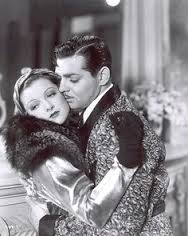
Do you ever watch old movies? Can you picture Clark Gable, Cary Grant, Mae West, Joan Crawford, and Ronald Reagan (just checking to see if you are still reading) swooning or opening their mouths in perfect circles, eyes bulging?  Isn't it somewhat laughable today to think they were expected to overact like that?  But that was how they made things bigger than life to excite the viewers.


Now it is authenticity that draws viewers in. Think of Nicole Kidman or Meryl Streep at their best. We can see numerous emotions cross their faces in a matter of minutes as something dawns on them. It is often the music itself that sounds melodramatic or old school. To see an amazing example. Watch this clip from Birth, beginning at 1:50.  You'll see so many emotions cross Kidman's face. Can you even count them?  https://www.youtube.com/watch?v=lpJj9c2OV-0

Incredible right? It didn't take exaggerated emotions to get the ah-ha moment across. Her revelation appeared much more like it would in real life if a boy was claiming to be her reincarnated husband (especially her old beau Tom Cruise)... only to end up being true.


Next time your character wants to express undying love, fear, surprise or any number of other emotions, instead of making the dialogue big and unrealistic, use the words or feelings that your character would really have. Method act on the page.
 
Do the hand on forehead test and say the lines.  Do you feel like you are in a soap opera? If so, make the emotion come from the inside, from real dialogue, real narrative. Let it arise out of your Point of View. And give us the real thing.   Good Writing! - From the Inkpot


Saturday, June 18, 2011

Cooking Our Bounty


Last time I wrote about planting our literary seeds, weeding, and harvesting. Today I ponder tools, secrets, and tricks for turning our produce into an enjoyable meal.

Equipment is important. It’s almost impossible to cook or write without the proper tools. Cutting boards, knives, and woks are a few of the tools necessary to prepare vegetable stir-fries. For writers it’s not only about the laptop. It’s about collecting the skills essential to our craft. Taking classes, attending workshops, reading books on writing, finding a good writing coach or critique group.

It’s best if we weigh carefully the flavors we work with. Our choice of genres can be thought of as our garden’s herbs and spices. Mix too many genres and we’ve got confusing flavors. Hybrid genres are one thing. A post apocalyptic fantasy thriller that takes place in the Wild Wild West with SF and romantic elements will taste like some of the confusion foods that try to pass as fusion foods. Know what we are writing and write it boldly.

Just as gardeners and cooks approach produce differently, each writer has a unique style and brings to his work different strengths. Some focus on plot and some excel at developing characters. Some are all about the beauty of the sentence. Even thin or unwieldy plots can sell well if the writing is brilliant, just as one chef’s simple, local offerings can succeed as can the creations of another who focuses on complex and exotic ingredients.

Writing, like gardening, is all about hidden secrets. Seeds are the most obvious and miraculous secrets. But there are countless other garden secrets. Sure, a zucchini plant can net enough fruit to feed 100 armies, but if plucked at the just the right time, the blooms can be used to make one of the best appetizers in the world, stuffed squash blossoms. In a writing career and in each of our books (regardless of genre) there are hidden mysteries. The secret is to find and share them.

We grow veggies to eat them. It’s important, then, to do them justice, but not too much justice. Cooking them too long turns them into paste. Some of us writers cook our books so long we never consider our work finished. Sometimes we fear failure; sometimes we fear success; sometimes we hesitate to start a new project. If we are aware of our fears, we may be less likely to overcook our produce.

On the other hand, there are those of us who don’t let the sauces simmer long enough to meld the flavors. We whip through a draft or two then send our books off, false hope in the mail. Tomato sauce doesn’t belong on noodles unless it’s had a good long time to simmer the flavors to Italian perfection. We’re better off considering five drafts half simmered.

We could layer in discussion about our lives as the soil we start with, fertilizers that inspire our words, bad-habit weed barriers, and selling our produce in the farmer’s market. But metaphors are like truffle shavings, too much of a good thing overwhelms.

Words are food for thought. We grow them so we and others can enjoy them.

The clouds are cooperating. Inkpot wishes you good gardening and good eating! Bon Appetite!

Saturday, December 4, 2010

Be hopeful; be very hopeful

My first eight books were written and published before I knew anything about writing. Now that I can almost distinguish good writing from bad, my ambitious, carefully crafted new novel languishes without agent or publisher. It's been eight years, but I'm still rewriting, more hopeful than ever. Writing is all about hope, because with it comes the confidence to sit down day after day with bottom in chair, hands on keyboard (BICHOK).

A little knowledge is a dangerous thing. My trouble began when I paid a man to read my sixth Plumtree series novel for accuracy in British English. He pointed out an unfortunate "chime" in the prose, meaning the way words sounded in proximity to each other. At the time I had no idea what he meant, and as I sought understanding, my journey began into the depths of all that I didn't know. I undertook an ambitious novel that I wanted to make truly beautiful in a hundred different ways. It's taken a dozen drafts, constructively scribbled upon by fellow Sisters of the Quill--thank you sisters and brother--to raise my awareness. I'm too horrified now to go back and read the earlier books with all their painful mistakes. In writing as in other aspects of life, we can only forge ahead and use what we learn to do better next time.

Here's cause for hope: if an untrained, bumbling neophyte can stumble (unfortunate chime?) into publication, you who have apprenticed yourselves to your craft should be shoo-ins.
-Storm Petrel

Friday, August 27, 2010

Craft versus Voice

A writer friend, Frank Dorchak, poses the question of craft versus heart of writing fiction.

http://fpdorchak.wordpress.com/2010/08/28/what-is-writing-really/#comment-74

I say both are important and many others have said it better:
Craft:
“Besides the noble art of getting things done, there is the noble art of leaving things undone. The wisdom of life consists in the elimination of non-essentials.” – Lin Yutang
Heart:
“When a thought takes one’s breath away, a grammar lesson seems an impertinence.” – Thomas W. Higginson

Inkpot says: We don't write just to show off craft or just to share our voices and hearts with others. We write like addicts when it seems we should give up. Why? Because the writing itself is cathartic and cheaper than a psychiatrist and drugs – unless they are generic.